
On March 5, 2026, Cognito Therapeutics announced the completion of a $105 million Series C financing round. The round was led by Morningside Ventures, IAG Capital Partners, and Starbloom Capital, with participation from Apollo Health Ventures, New Vintage, Benvolio Group, and other institutions.

Professor Li-Huei Tsai’s team at MIT has once again made a breakthrough in the field of non-invasive neuromodulation. By using visual light stimulation at specific frequencies, they successfully intervened in the pathological progression of Alzheimer’s disease. While the world focuses on this discovery, as a team also deeply engaged in near-infrared (NIR) neuromodulation, we see not only a research achievement but also a signal of a new era: photobiomodulation (PBM) is moving beyond the laboratory and becoming a core language for reshaping brain homeostasis.
The dual-track evolution of neuromodulation: ocular vs. transcranial
Professor Tsai’s team used gamma-frequency optical stimulation to activate microglial cells in the brain, demonstrating that light stimulation can precisely regulate the oscillation frequency of neural networks. This has a similar underlying principle to the transcranial photobiomodulation (tPBM) technology used by Brainlume.

Different pathways, a unified goal:
Trans-ocular (Visual): Focuses on using the visual pathway, where specific light frequencies guide the brain to generate particular oscillations, aiming to clear beta-amyloid and improve cognitive function.
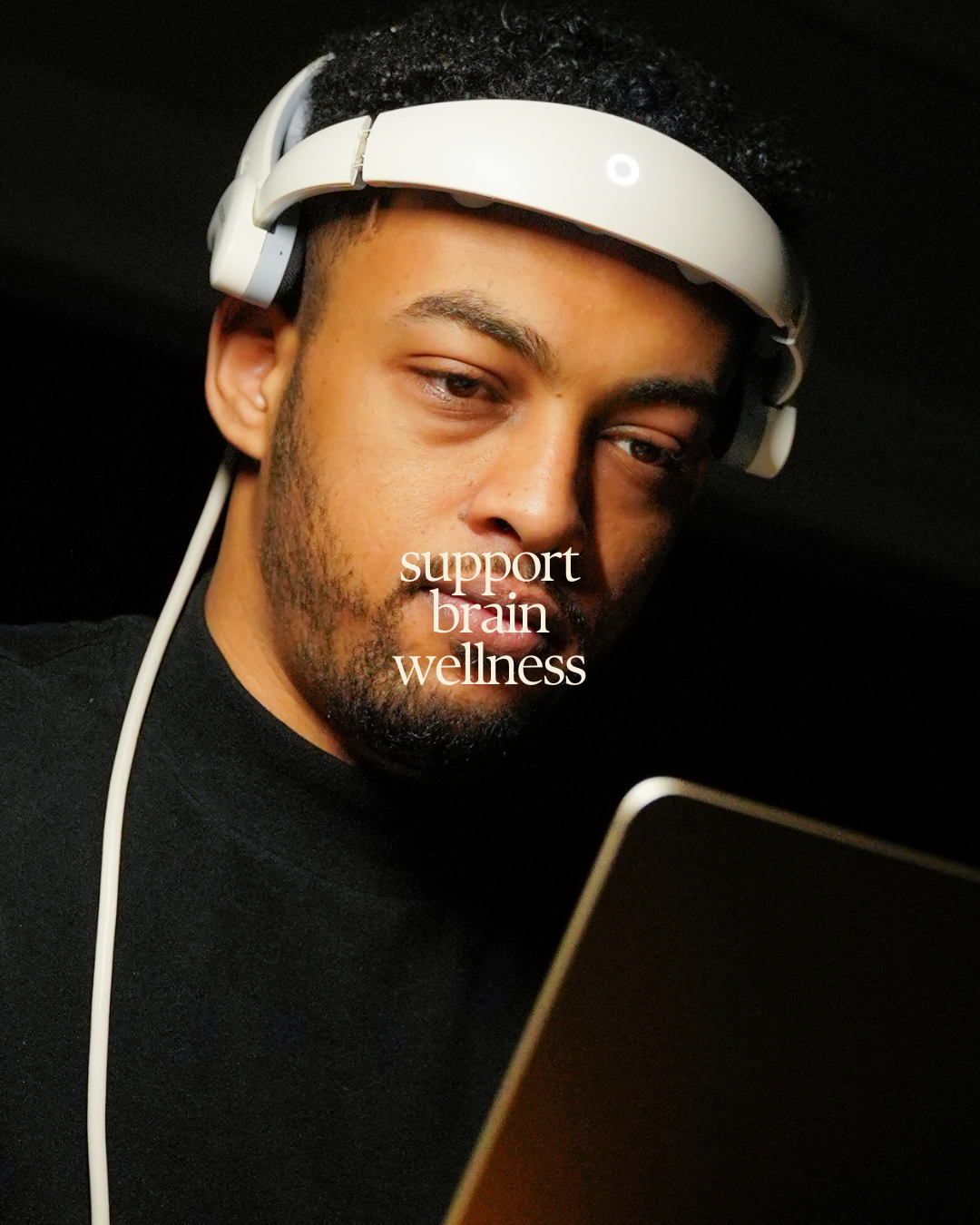
Transcranial: Acts directly on the cortex. NIR photons penetrate the skull to optimize mitochondrial metabolism, increase cerebral blood flow, and improve neural metabolic homeostasis.
Although the approaches differ, they ultimately converge on the same objective: how to repair damaged or declining neural connections in the brain through non-invasive physical methods.


Why does the world believe in the future of “light”?
Why can light become a game-changer in neuromedicine?
Extremely high spatial and temporal precision:
Compared with the systemic metabolism of traditional drugs, light—being a physical medium—offers greater controllability and measurability.
Very low endogenous interference:
Drugs must cross the blood–brain barrier (BBB) and are often accompanied by complex metabolic side effects. Light, as a wave, can directly induce neurophysiological responses, avoiding the toxic side effects associated with chemical molecules.
A paradigm shift from “treatment” to “enhancement”:
The future we envision is not only about repairing disease, but also about enhancing the potential of the healthy brain—optimizing cognition, improving stress resilience, and regulating emotional stability.
The future has arrived: the “photosynthesis” era of neuromedicine
Seeing the current progress in both capital investment and clinical development is exciting. This is not only academic validation for the field of photobiomodulation, but also a sign that the societal awareness threshold for light-based neuromodulation technologies is being surpassed.
Brainlume’s first transcranial light technology and product
We firmly believe that the future of neural homeostasis management will be an ecosystem composed of eye-based stimulation and transcranial regulation.
- Eye-based technology focuses on frequency-based interventions to address specific neurodegenerative conditions.
- Transcranial technology (such as Brainlume) focuses on optimizing energy metabolism to build a long-term biological homeostasis barrier for the brain.
Although our path differs from that of the research team at MIT, we share the same vision: to transform the brain from an “indescribable” black box into a system that can be repaired, optimized, and enhanced through physical modulation.

Light does more than dispel darkness—it can also illuminate neural pathways.
The future of neuromodulation has arrived. We are continuously iterating and improving Brainlume’s NIR transmission models and algorithms, striving to ensure that this “sense of security from light” can reach more people’s daily lives.
How do you view the potential of non-invasive light modulation in the future of medicine?
Feel free to share your thoughts with us in the comments.


Compartir:
How Does Light Change the Brain? The Scientific Principles of Near-Infrared Brain Light Regulation.