


1
Light-Based Input
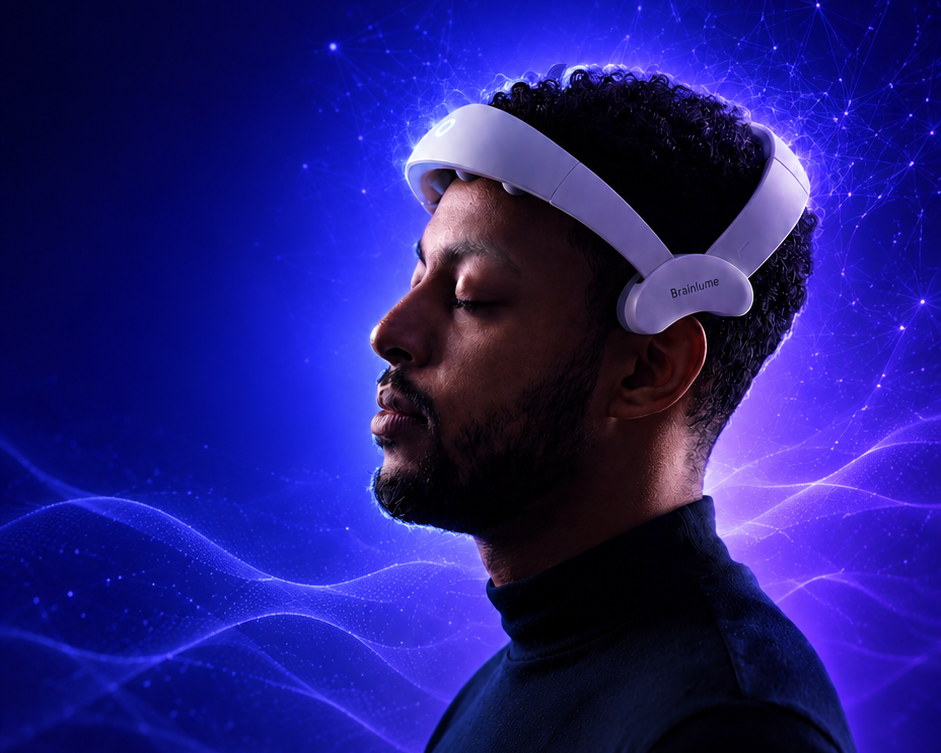
810nm near-infrared light is delivered to the scalp area through head-worn light modules.

¿ES TU PRIMERA VEZ?
Suscríbete a nuestra newsletter y sé el primero en enterarte de nuestras novedades, promociones especiales y exclusivas online.

tPBM stands for transcranial photobiomodulation.
It is a light-based approach studied for how near-infrared light interacts with the head and cellular energy processes, without heat or strong stimulation.
Uses specific wavelengths of near-infrared light.
Light is designed to pass through the scalp and skull.
Studied for how light interacts with cellular energy pathways.
Operates in a low-sensation, non-thermal range.
Brainlume uses 810nm near-infrared light in a low-sensation, non-thermal range studied for interaction with cellular energy pathways.

810nm near-infrared light is delivered to the scalp area through head-worn light modules.
Studied for its interaction with mitochondria and ATP-related cellular energy pathways.

Support may feel subtle and gradual, because the process is low-sensation and non-thermal.

tPBM is not a treatment or cure. Individual experiences may vary.
In photobiomodulation research, near-infrared light is often discussed in relation to cytochrome c oxidase, a mitochondrial enzyme involved in cellular respiration. Researchers commonly describe these pathways in connection with ATP-related energy metabolism, oxygen use, nitric oxide signaling, and downstream cellular responses.
Because these processes happen below the level of strong sensation, the experience may feel subtle. For many users, Brainlume is best understood as a consistent light-based routine rather than an immediate stimulation effect.
Often described as the cell’s energy centers and a key focus in photobiomodulation research.
A mitochondrial enzyme commonly discussed as one of the light-sensitive targets in PBM studies.
ATP is the molecule cells use for energy, helping explain why PBM is studied at the cellular level.
Little or no sensation during use can be normal. Brainlume is designed for low-sensation, non-thermal light support — not heat, vibration, or strong stimulation.
Because photobiomodulation is studied as a cellular-level process, the experience may not feel dramatic during the session itself. Some users may notice changes more gradually through their wind-down routine, sleep habits, focus moments, or next-day clarity.

Time to wind down
Sleep quality
Next-day clarity
Afternoon fatigue
Focus after sessions
Overall calmness
Two light rhythm modes, one simple 20-minute session structure.


Choose Day Mode when you want to feel clearer, and Night Mode when you want to wind down.
A balanced session length designed for consistency, comfort, and daily use.
Common questions about how Brainlume works, what you may feel, and how to use it as part of a daily wellness routine.
tPBM is the study of how red or near-infrared light delivered through the head may interact with biological tissues and cellular energy pathways. Brainlume uses 810nm near-infrared light in a simple, head-worn format designed for daily brain wellness routines.
Brainlume delivers 810nm near-infrared light to the scalp area through six head-worn light modules. Photobiomodulation research studies how near-infrared light interacts with mitochondria and ATP-related cellular energy pathways. The experience is designed to be low-sensation and non-thermal, rather than hot or stimulating.
You may feel little to nothing during use, and that is normal. Brainlume is designed for low-sensation, non-thermal light support. Many users notice changes more gradually through wind-down, sleep routine, focus, or next-day clarity rather than during the session itself.
Use 40Hz Day Mode when you want to support focus, clarity, or a daytime reset. Use 10Hz Night Mode when you want to relax, wind down, or build a calmer evening routine. Both modes follow the same 20-minute session structure.
Brainlume’s 20-minute session is designed to deliver a consistent near-infrared light dose while staying simple enough for daily use. Each of the six LED-based modules provides approximately 180 mW of average optical output, for a total average optical output of about 1.08 W across all modules. Over 20 minutes, this corresponds to approximately 168 J/cm² of radiant exposure at the scalp area.
No. Brainlume is designed as a general wellness device to support relaxation, sleep routines, focus, and daily brain recharge. It is not intended to diagnose, treat, cure, or prevent any disease. Individual experiences may vary.