
01. National strategic support ushers in a golden age of development for brain-computer interfaces.
With the "14th Five-Year Plan" listing "brain science and brain-inspired research" as a major scientific and technological project and explicitly proposing to strengthen the development of cutting-edge technologies such as brain-computer interfaces, China's investment in the field of brain science has entered the fast lane. Looking ahead to the upcoming "15th Five-Year Plan," brain-computer interfaces, as a core component of future industries, will continue to achieve leapfrog development under policy guidance. The "Implementation Opinions on Promoting the Innovative Development of Future Industries" issued by seven ministries, including the Ministry of Industry and Information Technology, has explicitly defined brain-computer interfaces as one of the future industries, aiming to break through key technologies such as brain-computer integration and brain-inspired chips, and create landmark products. This national-level strategic layout has injected strong momentum into the entire industry, driving brain-computer interfaces from laboratory research to large-scale, industrialized applications.
2. What is a brain-computer interface?
A Brain-Computer Interface (BCI), as the name suggests, establishes a direct communication pathway between the human brain and external devices (such as computers or intelligent machines). It bypasses traditional peripheral nerves and muscles, enabling a direct connection between "thought" and "action." A complete BCI system typically includes: Signal acquisition: Collecting electrical, magnetic, and other signals generated by the brain through electrodes (invasive, semi-invasive, or non-invasive). Signal decoding: Using artificial intelligence algorithms to preprocess, extract features from, and recognize patterns in the collected signals, deciphering the brain's intentions or states. Command execution and feedback: Converting the decoded commands into control signals to drive external devices (such as robotic arms, wheelchairs, and smart home devices) to perform corresponding actions, and providing feedback to the user, forming a closed loop. Based on the technical approach, BCIs can be divided into two main directions: Output BCI: "Brain control of everything," primarily interpreting brain signals to control external devices, which is currently the mainstream application. Input BCI: "Everything into the brain," encoding information and inputting it into the brain for sensory restoration (such as artificial retinas) or neuromodulation, which is an important future direction.
3. Technological approaches are diverging, with China focusing on "minimally invasive" and "non-invasive" methods.
Against the backdrop of independent innovation and industrial security, China is demonstrating unique technological preferences in the field of brain-computer interfaces (BCI). The "2025 Brain-Computer Interface Industry Blue Book" indicates that, compared to the United States' focus on invasive approaches, China is more inclined towards semi-invasive and non-invasive technologies. Semi-invasive approaches carry lower surgical risks and fewer immune responses, and several successful clinical trials have already been completed in China. Meanwhile, non-invasive BCI, with its non-invasive nature, high safety, and broad applicability, is becoming the main driving force for popularization in the consumer market.
4. Industrial applications are making a comprehensive leap towards "everyday life."
- Medical Rehabilitation:
New Breakthroughs in Functional Reconstruction Significant advancements have been made in the field of medical rehabilitation, encompassing motor function reconstruction, sensory ability restoration, and intervention for nervous system diseases, shifting treatment models from symptom control to functional reshaping.
- Home Healthcare:
New Trends in Intelligent Management Non-invasive brain-computer interface devices are rapidly becoming widespread, enabling 24/7 health monitoring and cognitive enhancement, and improving core cognitive functions such as attention and memory through neurofeedback training.
- Industrial Applications:
New Scenarios for Intelligent Control Applications continue to deepen in industrial and specialized fields, including rehabilitation training, human-machine collaborative work, and intelligent control applications in special environments. Emerging Industries: New Ecosystems of Cross-Industry Integration Deep collaboration with multiple fields is giving rise to entirely new interactive experiences and value ecosystems, driving innovative changes in industrial forms and service models.
- Traditional Upgrades:
New Pathways for Intelligent Empowerment Brain-computer interface technology empowers the intelligent transformation of traditional industries, driving the manufacturing, service, and other sectors towards personalized and efficient upgrades.
5. Brainlume's non-invasive light stimulation technology opens up new possibilities for "at-home brain health."
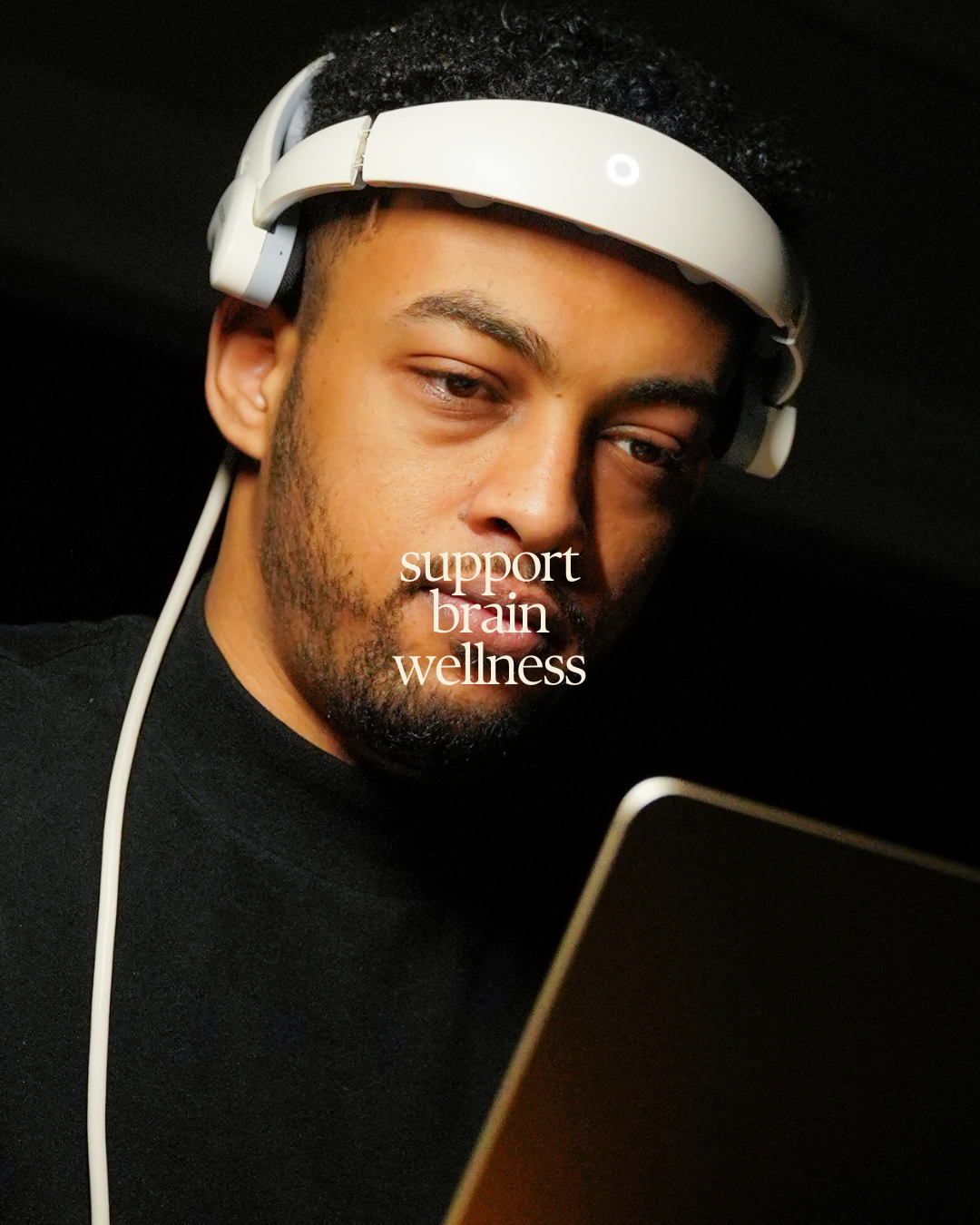
In the non-invasive BCI (Brain-Computer Interface) segment, Shanghai Jinze Technology's Brainlume transcranial photostimulation device, centered on "non-invasive, home-based, and intelligent" features, is a pioneer in the trend of "democratization" of this technology. It integrates photobiomodulation and potential electroencephalogram (EEG) monitoring, bringing cutting-edge brain science technology into ordinary households in a low-risk, high-compliance manner, providing users with a long-term, convenient solution for brain function health management.
Key Technological Highlights:
- Precise targeted regulation: Using 810nm near-infrared light, it penetrates the skull to target the prefrontal cortex, regulating mitochondrial function and promoting ATP production, thereby improving brain function at the level of energy metabolism.
- Dual-frequency mode adapts to multiple scenarios: The built-in alpha mode (10Hz) is for daytime cognitive enhancement and focus training, while the gamma mode (40Hz) is for nighttime sleep promotion and emotional relaxation, meeting users' needs throughout the day.
- Forward-looking design of closed-loop brain-computer interfaces: Future plans integrate EEG brainwave monitoring with optical stimulation to create an integrated "sensing-modulation" closed-loop system, achieving truly personalized and adaptive intervention.
Clinical and market validation: We have currently partnered with several leading tertiary hospitals, including the General Hospital of the People's Liberation Army and Beijing Tiantan Hospital, to conduct multi-center clinical trials, with over 200 enrolled patients. Our approach emphasizes "using science, not drugs; using technology, not dependence."
6. Four major challenges in the industrialization process
- Technical bottlenecks: signal accuracy and system reliability
- Non-invasive devices are limited by the weakness of brain electrical signals and noise interference, and their decoding accuracy urgently needs improvement;
- Invasive devices face challenges such as biocompatibility and long-term stability, and electrode materials and implantation techniques are still immature;
- System integration requires breakthroughs in the collaborative design of high-density electrodes and ultra-low power chips.
- Talent gap: Insufficient supply of interdisciplinary and versatile professionals.
- Brain-computer interface technology involves more than ten disciplines, including neuroscience, materials engineering, and artificial intelligence, but only Tianjin University in China offers a relevant major;
- Conservative estimates suggest that the talent demand will exceed 200,000 by 2030, and the existing training system is insufficient to meet the needs of industrialization.
- Capital pressure: Long-term investment and commercialization uncertainties
- Developing a single product from R&D to market launch requires an investment of hundreds of millions of yuan, with a return on investment period of over three years;
- The scale of industrial investment and financing declined in 2024, and capital investors are skeptical about commercialization prospects;
- Although Tiered Healthcare received 350 million yuan in Series B financing, most small and medium-sized enterprises still face financing difficulties.
- Ethics and Regulation: Data Privacy and the Lack of Standards
- The ownership and usage boundaries of brainwave data are not yet clearly defined, posing a risk of privacy breaches;
- Although ethical guidelines and a standardization roadmap for brain-computer interface research have been published, specific legal regulations and industry standards still need further development.
7. Conclusion: The next five years are crucial for the industrialization of brain-computer interface technology.
Driven by policy support, technological breakthroughs, and expanded applications, China's brain-computer interface industry is poised to transition from "laboratory research" to "large-scale commercialization." With state-owned enterprises leading the formation of innovation alliances and hospitals and companies collaborating on clinical wards, the industry ecosystem is beginning to take shape. However, only by overcoming technological bottlenecks, addressing talent shortages, innovating capital support, and perfecting the ethical framework can China seize a leading position in this global technological competition and ensure that brain-computer interfaces truly become a vital engine for improving people's lives and fostering new productive forces.
References:
- "2025 Brain-Computer Interface Industry Blue Book"
- "White Paper on Key Technologies of Brain-Computer Interface Patents"
- Forward Industry Research Institute
- China Academy of Information and Communications Technology (CAICT)
- Nearlink Technology Product Technical Data and Clinical Research Progress


Share:
How to fall asleep quickly after working overtime and staying up late? My light therapy bedtime ritual.
Near-Infrared Light (tPBM) Therapy for ADHD: From Research to Application — A New Hope for Non-Invasive Treatment