
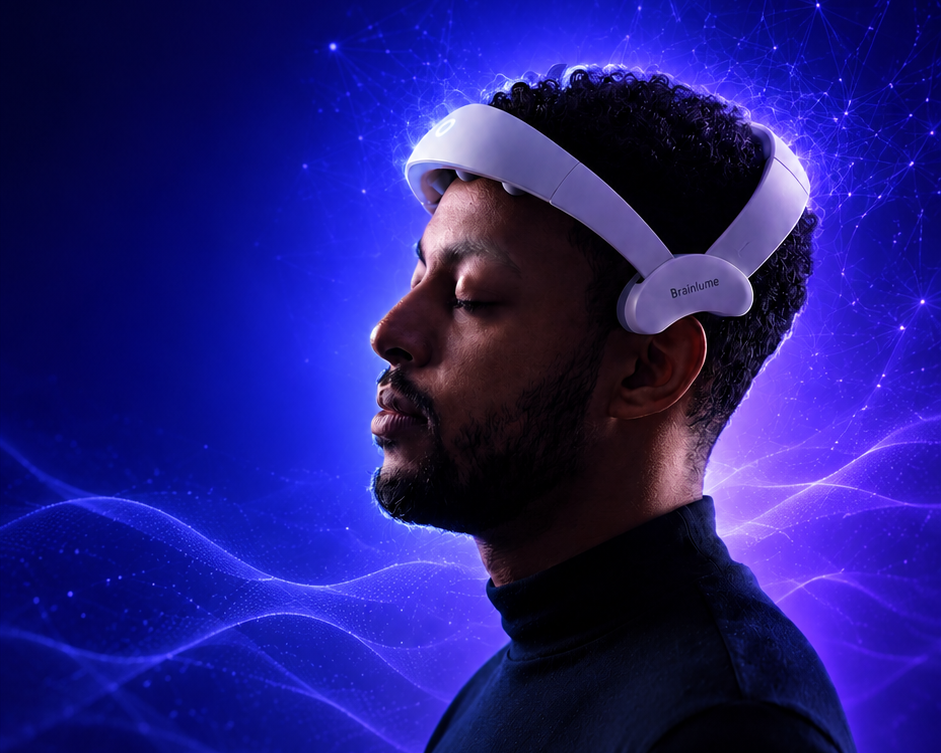

If you are considering a wearable that uses near-infrared light, it is reasonable to ask how researchers evaluate its effects on the brain.
Safety research can examine several aspects of an intervention: whether brain structure changes, whether electrical recordings show concerning patterns, whether cognitive performance is affected, and how participants feel during and after use.
A 2024 paper in Brain Stimulation provides a useful example of this approach. Li and colleagues studied 1064nm laser-based transcranial photobiomodulation in healthy volunteers, using several experiments to examine different safety outcomes. Read the study.
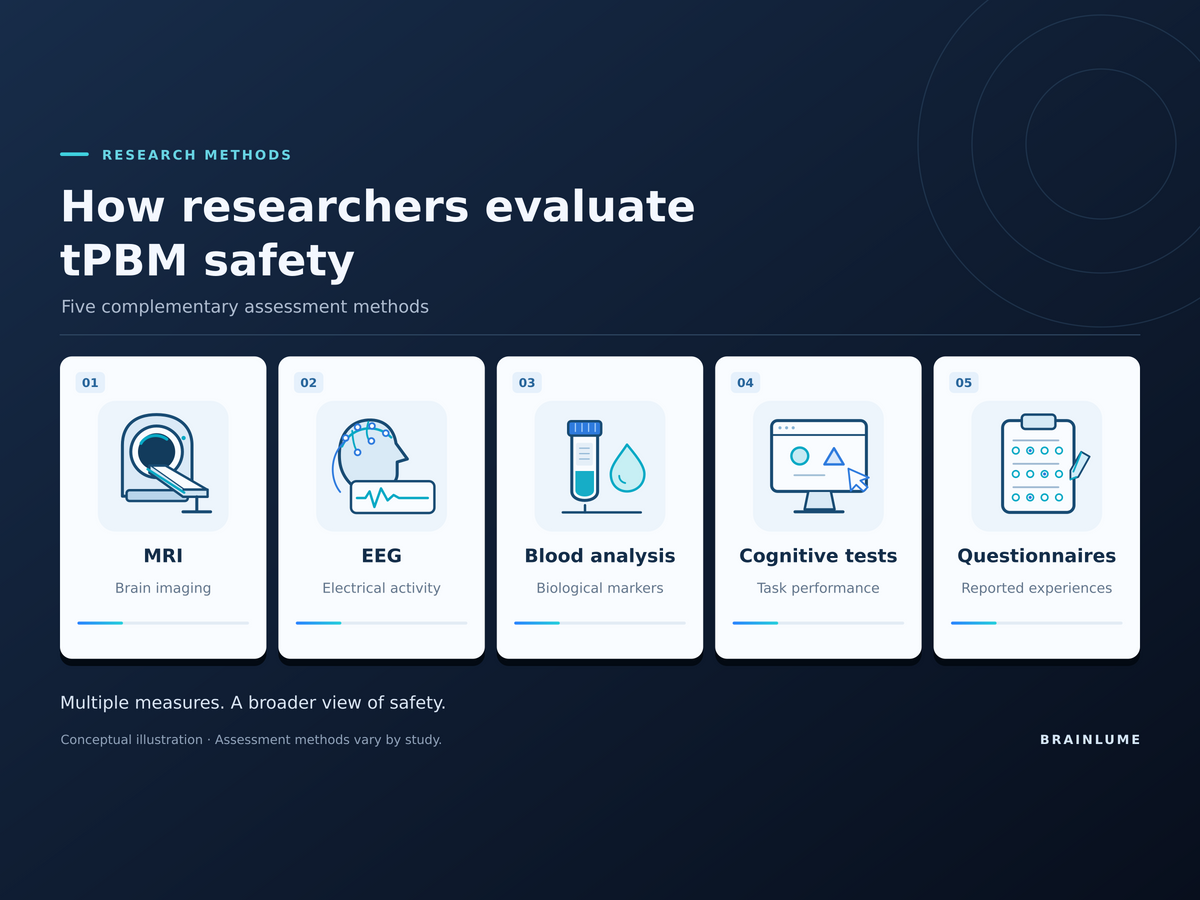
Five ways to examine safety
The researchers brought together objective measurements and participant reports:
| Method | What the researchers examined |
|---|---|
| Structural MRI | Changes in measured brain-tissue volume and density |
| EEG | Electrical activity, including inspection for epileptiform patterns |
| Blood analysis | NSE and S100β, markers used in assessing neuronal or glial injury |
| Cognitive tasks | Possible impairment in components of executive function |
| Questionnaires | Experiences such as fatigue, warmth, pain, itching, and dizziness |
Different groups took part in these experiments. Most assessments concerned short-term responses, while the MRI experiment compared scans before and after 11 consecutive days of stimulation. The methods and exposure settings also varied between experiments. Study design.
What the researchers reported
Within the tested settings and observation periods, the team reported no significant adverse changes in the structural measures examined, no increase in the two blood markers, and no impairment in the executive-function outcomes tested. No epileptiform components were detected in the post-stimulation EEG recordings they inspected.
Participant questionnaires indicated low levels of discomfort, with no significant difference between active and sham conditions in the reported sensation scores. These findings are reassuring for the protocols studied and show the value of looking at several outcomes together. Study results.
Why the study details matter
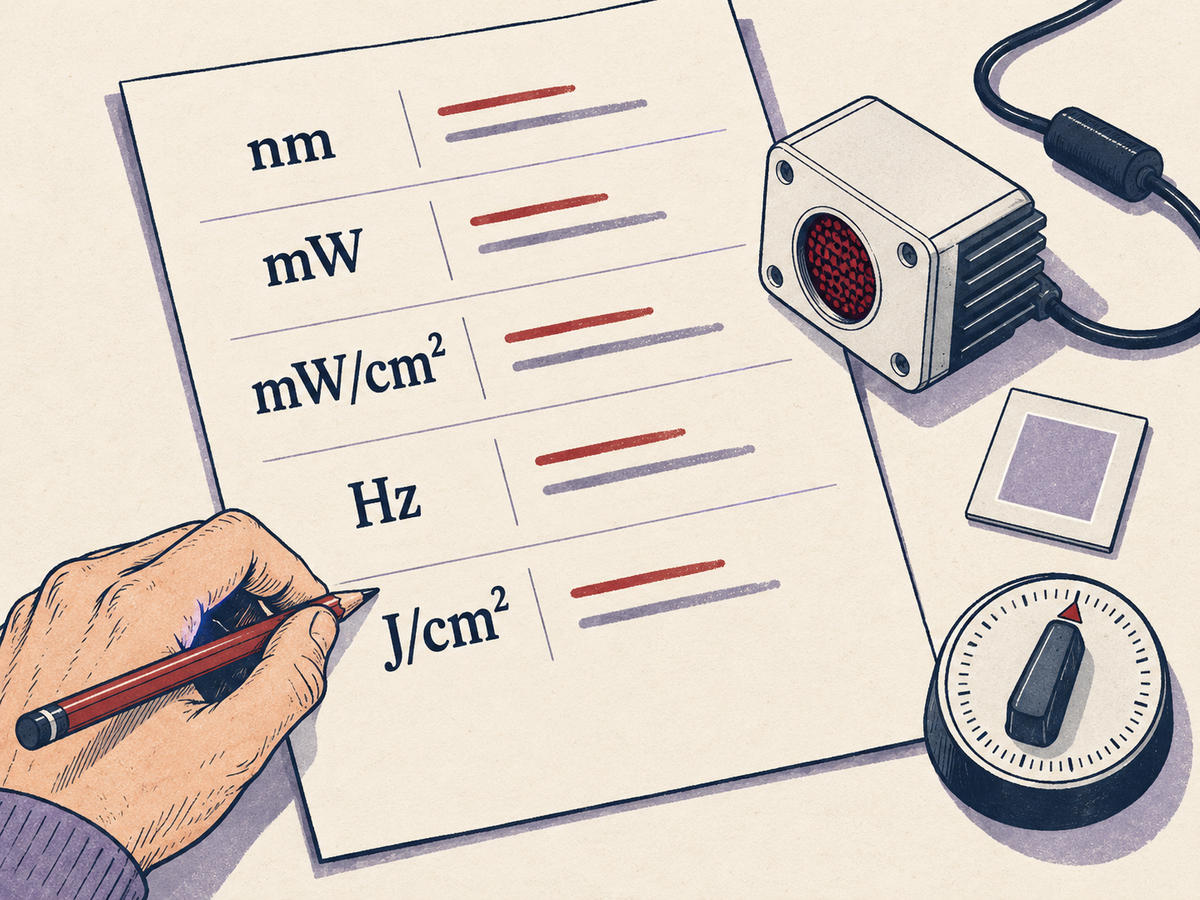
To understand a safety finding, it helps to know the wavelength, light source, output, exposure time, delivery location, and people included in the research.
Observation time matters too. A study of immediate responses answers a different question from a study following repeated use over months. Combining those kinds of evidence over time builds a fuller picture.
This paper examined a 1064nm research laser. The paper illustrates a safety-assessment framework; evaluating a finished wearable also requires evidence specific to its design and intended use.
Reading product information with confidence
For a daily-use device, look for clearly stated light parameters, session instructions, and guidance on fit and comfort. It should be easy to understand how to use the device and how to contact the company with a question or an unexpected experience.
Comfort deserves attention in its own right. A pressure point from a wearable’s fit is something to address, even when the scientific discussion concerns light exposure.
Knowing what researchers measure gives you a stronger basis for reading safety information and asking useful questions about any light-based device.
Read Brainlume’s use and comfort FAQs.
Reference
Li Z, Zhao Y, Hu Y, et al. Transcranial low-level laser stimulation in the near-infrared-II region (1064 nm) for brain safety in healthy humans. Brain Stimulation. 2024;17:1307–1316.

Share:
Brain Energy, Blood Flow, and Near-Infrared Light
Wavelength, Power, and Dose: Understanding PBM Specs